The Old Man is Snoring
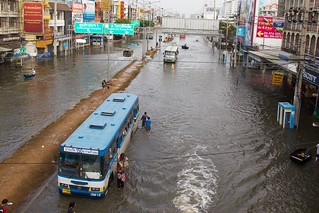
‘It’s raining, it’s pouring. The old man is snoring.’ Truth be told, I apparently snore, and I suppose I’m not that young anymore. But hard to believe, I’m sure this nursery rhyme is not about me. And despite the recent Noah-like floods in Europe, Bangkok, Calgary, Dhaka, Jakarta, New York and Toronto, it’s not really about any one city, or any one country, or even any one continent. But, ‘went to bed and bumped his head. And won’t get up in the morning,’ aptly describes our current political paralysis.
Many children know this song. Soon they will learn how their grandfathers and fathers slept through the rain.


 Canadians are supposed to be good in a few things: skating, painting trees and rocks, welcoming newcomers, writing engaging stories that surely must have a meaning in there somewhere, and paddling a canoe. The canoe—a bit like the moose—holds an almost mythic place in the Canadian psyche. Anything and everything can be compared to canoeing. This metaphor is apt when applied to city administration.
 A helpful way for young math students to grasp the concept of exponential growth is to look at water lilies growing on a pond. They grow exponentially and double in area each day. If they will fully cover the pond by the 30th day, on what day is the lake half covered? The twenty-ninth day
 For bees, bigger hives are better.